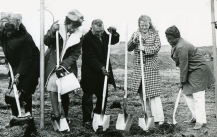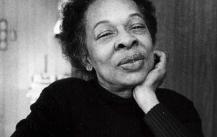

In 1985, in a small room inside a local shelter in Washington, DC, Dr. Jesse Barber and Dr. Janelle Goetcheus co-founded Health Care for the Homeless Project (HCHP). The organization was established to provide primary care services to individuals and families experiencing homelessness who were living in the city’s emergency shelters or on the streets. Two years later, HCHP became one of 13 public-private partnership grantees awarded funding by the Robert Wood Johnson Foundation and HCHP became designated as a federally qualified community health center.
At the request of federal and District leaders, Unity assumed management of local clinics and expanded access to comprehensive services in areas with limited provider availability. Services expanded beyond shelter-based care to include primary and specialty care for all District residents regardless of ability to pay. In 1997, changed its name to Unity Health Care. What began as a targeted response to homelessness developed into a broader community health system designed to address access gaps across the city.
Today, Unity Health Care serves over 76,000 patients annually through more than 20 traditional and nontraditional health center sites and a walking medical outreach program, making it Washington, DC largest community health center network. Unity’s growth reflects intentional expansion into communities experiencing persistent health disparities. In a city where life expectancy varies significantly by neighborhood, Unity has invested in “East of the River” communities and other medically underserved areas.
Services include comprehensive primary care, dental, behavioral health, pharmacy school-based health centers, and correctional health services, Unity’s pediatric services include Healthy Steps, which works to increase well-child visit completion and immunization rates while strengthening developmental and behavioral health screening for young children.
Behavioral health integration has expanded through embedded care teams, a growing Medication Assisted Treatment program, and partnerships to improve coordination for patients with complex needs.
Medical respite care, rooted in the early work of co-founder Dr. Goetcheus, continues to serve patients experiencing homelessness who require short-term recovery support following hospitalization. Through a recent partnership, Unity supports Hope Has a Home for Women and the 801 East shelter-based respite program. Prior to these expansions, the majority of the district’s medical respite beds were designated for men.
Integrated in-house pharmacy services help to reduce cost and access barriers for patients managing complex conditions. In 2023, specialty pharmacies located at Unity’s at Parkside and Upper Cardozo Health Centers received accreditation from the Accreditation Commission for Health Care. Unity pharmacies fill more than 117,000 prescriptions in one year, including specialty medications for HIV and Hepatitis C.
Addressing social drivers of health is incorporated into routine care delivery. To address food insecurity, a challenge reported by one-third of the center’s patients, Unity partnered with the Capital Area Food Bank to launch a Food Pharmacy program offering medically tailored groceries to older adults and patients with hypertension, diabetes, and other diet-impacted conditions. The program began at East of the River Health Center and expanded to Anacostia Health Center in 2025.
As a teaching health center, Unity supports the training of primary care clinicians through a family medical residency and training community campus in partnership with A.T. Still University and The Wright Center for Graduate Medical Education. Unity also established a Post-Graduate Behavioral Health Fellowship to strengthen the regional workforce pipeline and expand access to licensed clinical providers.
In addition to its local work, Unity has participated in national and international knowledge exchanges. In 2023, Unity represented community health centers in a bilateral dialogue between the U.S. Department of Health and Human Services and the Indian Ministry of Health and Family Welfare, highlighting integrated care delivery, housing-informed health strategies, and community-based primary care.
Four decades after its founding as Health Care for the Homeless Project, Unity Health Care’s commitment to providing high-quality, comprehensive medical, dental, behavioral health, and supportive services has only grown in scope and scale. Its expansion across the district reflects sustained efforts to reduce disparities in access, improve quality outcomes, and integrate care models responsive to community need.
This article was published in 2026.